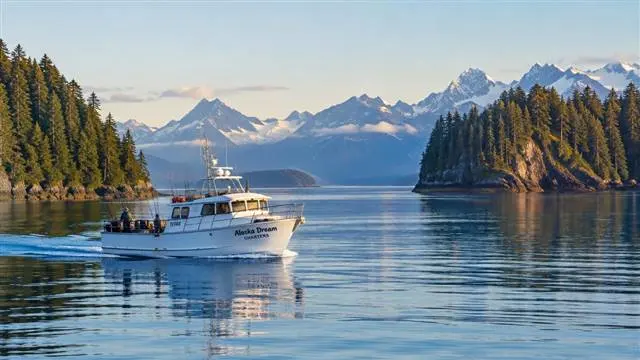
It is far more interesting to treat an island coast as more than scenery along a route. While traveling through dark spruce forests, deep glacial fjords, exposed tidal flats and secluded coves, each with its own needs for timing, distance and preparation, the visitor can choose the proper vessel, gain insight into the behavior of wildlife and avoid a pleasant experience turning into disruption. Such a trip offers the opportunity of viewing light scattering off wet rocks, a bald eagle flying from a beach tree or a whale breaching in the far distance.
Spruce forests meet the salt air
Dense stands of Sitka spruce growing on shoreline lie near the beach. They can have branches in the trees down to the water's edge and form the upper beach with fallen timber. Roots of trees, driftwood, moss and even freshwater seeps create a forest edge or transition zone used by many species. The edge can be deceptively difficult to travel through, however, with wet roots, loose rock and thick vegetation hindering progress.
The transition from forest to beach can be tricky to negotiate. There are wet roots to twist an ankle on, loose rocks to fall on, and thick vegetation to push through. Be sure to don durable footwear before venturing up the beach for a long shore walk. Be sure to keep your landing site small and avoid creating informal trails as you move up from the beach through the trees.
Fjords change the trip's rhythm
A fjord's steep walls can block the wind, obstruct your view of land and wildlife, even hinder your hearing of birdsong. The distance between your boat and a shoreline can appear to change greatly. A sheltered cove's calm waters can afford excellent wildlife viewing, while a narrow channel can present challenges when turning a sharp corner, dropping anchor, or landing on a beach.
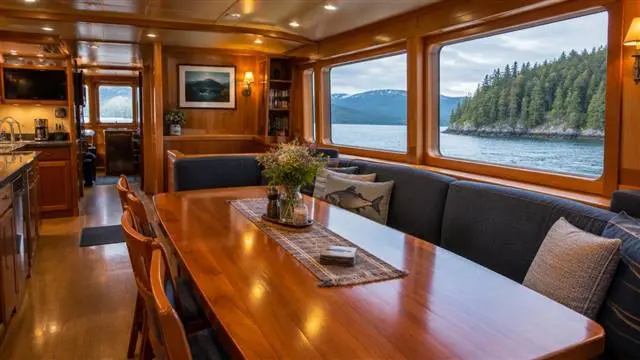
A covered vessel will typically be the best choice for island coastal cruising for larger groups and for carrying gear. However, for the occasional very shallow cove or short shore trip a smaller skiff can be perfect. However, care must be taken to assess the ability of the operators to safely load and unload the skiff in rough conditions and to travel in cold water. Again, the choice of platform will depend upon a number of factors including the intended route, the number of people to be carried and the margin of weather expected.
Most boats are selected to go fast, often not realizing that how long it takes to get somewhere has little to do with how good a trip is. How one travels rough water has a great deal to do with it. Confirm a boat's intended operating limits, communication equipment and emergency procedures before you depart.
Tidal flats reward patience
Low water on an island coast provides some of the widest and most varied exposed intertidal areas found on earth. Like open oceans, exposed beaches present seemingly endless chance to view wildlife. Tidal flats are large expanses of mud, sand and exposed intertidal zone that at low tide reveal submerged channels, large areas of exposed shell, stranded kelp and other intertidal features that are covered at the next high tide.
Be sure to check the tide time before going ashore. Take the same route back to your boat as you did going out and do not assume a sandbar in the distance will support your weight. Even if another seems to be making it to the bar, it may collapse under your weight. Binoculars are the best way to view wildlife on the flats. They allow you to get a close look at the animals without having to go to them and disturbing them.
Sea otters and eagles need room
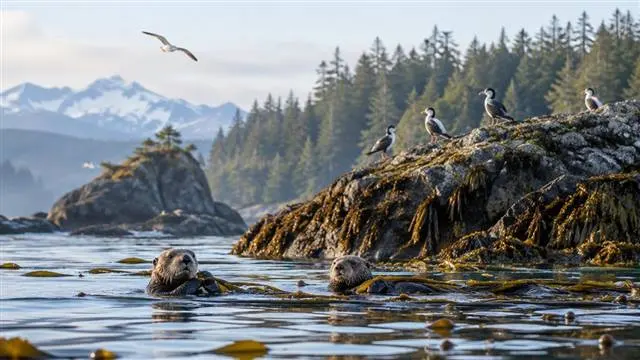
Sea otters are often seen resting on their backs in the calm water near kelp or rocky shoreline. Even when they appear to be doing nothing, however, they are constantly grooming themselves to keep their fur from matting. If a boat were to repeatedly circle and idle above an animal or even drive a group of them into the water, it would certainly disrupt their behavior and most likely cause them to flee the area.
Bald Eagles are commonly misunderstood as to their needs in regards to observation. They will often perch above a beach, seemingly watching for food, and be completely unaware of your presence. However, should you approach too closely, they will change positions on the tree, fly erratically, and eventually leave the area. Always keep a low profile when near trees that have perched Eagles, and never land in order to take a closer photograph.
Also, be aware that you may have to move further away from wildlife on shore. If wildlife begins to leave an area where you are observing them, then it is best to leave as well. This will help to ensure that you are not harassing wildlife.
Reading whales from a respectful distance
A whale might appear on the horizon as a blow, or as a black mass in the water traveling in the opposite direction, or as a fluke descending into the depths. Or it might disappear suddenly and remain hidden between surfacings for long periods of time.
Avoid harassing marine mammals for human entertainment by chasing after them to get a better look. Instead, keep a steady course, minimize noise and give the animals space to move as needed. They can change direction at any time including traveling with very young offspring. Federal and state regulations protecting marine mammals in the water must be adhered to by all visitors and activities on the water. These may change so check with current NOAA and Alaska state marine mammal protection information prior to your trip.
Check current NOAA and Alaska guidance before your trip, especially if you plan to enter a national wildlife refuge or other managed waters during your trip.
Light, weather and the ethics of looking
Be prepared for changing light. An island's silver haze can change in the twinkling of an eye to copper-colored water. Then, in a moment or two, it can shift again to deep blue, almost black water. Don't let the appearance of clear weather in the mountains behind you influence your decision to go ashore. Rain protection, warm clothing, eye protection and a means of communication are essential for these types of trips.
Responsible wildlife viewing is part of trip planning and is expected. All food, trash and fishing gear must be kept under control. Do not feed wildlife. Follow all closures and follow all posted rules for landing sites. binoculars are better than landing to get a closer look at birds and marine mammals on habitats such as tide flats.
Make sure to check Alaska Department of Fish and Game information and federal regulations before you head out to hunt, fish or land animals. Remember, there are many things that can change from year to year, so it is best to check the most current information as close to your departure date as possible. Carry required documents or references on your digital device.
Visit Alaska's coastline slowly. It is best experienced from a boat traveling slowly, while on land viewing wildlife with binoculars rather than approaching where animals reside and then landing on a remote beach and traveling miles over land to return to your boat.