
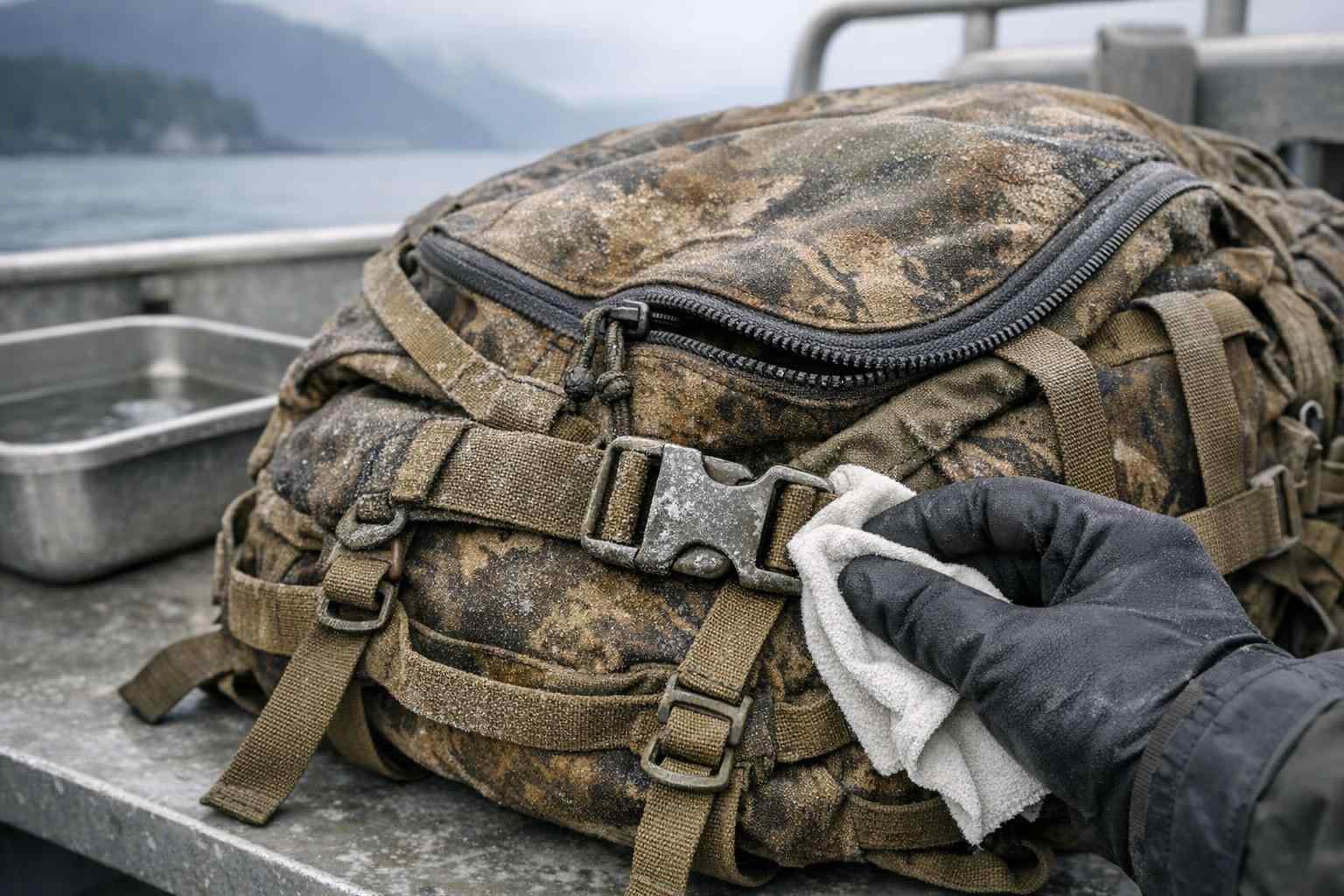
Don't underestimate the simple act of packing gear away after a trip and assess each item quickly for use in future trips and then do a simple reset to try and get the gear back to optimal serviceability. For example, rinse off some gear to try and remove salt residue and then use the items to wipe other gear clean and then store them away from any standing water to prevent damage to items such as electronics. Some items will be relegated to the dumpster as they will have rapidly diminished in usefulness.
Start with a post-trip sort, not a full scrub
Sort gear into 4 groups: (1) Fabric/SOFT Goods, (2) Sealed/Coated Items, (3) Mechanical Parts, (4) Electronic/Optical Items. Be sure to wash a waterproof case differently than you would wash a rain jacket, and do not wash binoculars as you would a stainless steel cooking pot.
Remove all cartridges, batteries, food, clothing, etc. from your packs, dry bags and cases before you start storing them away. Sort according to manufacturer's instructions for storage as well as safety. Don't wipe any surfaces with grit before you have shaken out as much of the grit as possible. This could cause damage to items with zippers, buckles and adjustment rings such as on clothing and some packs.
Corrosion does not have to be visible. Salty film on metal parts can be almost invisible on very dark surfaces. White crusts or grit in the folds of buckles and zippers on clothing and gear shows that the residue has dried in. It must be cleaned off.
Rinse the parts that can tolerate fresh water
Wash in fresh water to rinse out washable materials including clothing, storage containers, metal parts, boots made of rubber etc. Use a gentle stream of water to prevent forcing grit into closed seals and into creases of rubber etc. Use soft cloth and brushes to clean into between webbing's strands, into the teeth of zippers and into corners of molded items.
Remember to rinse the items to get the salt off of them and then dry them as well. This will prevent mildew from growing on the soft goods that you have stored in your gear to be hung up in the garage. Open up all of the pockets and leave all of the closures open on the gear that you have stored so that it can dry. Do not store your gear in an area where there is excessive heat as this will cause many of the glues, coatings and synthetic materials to deteriorate.
Remember to always follow the care labeling of your coated rain gear. Mild detergents and solvents as well as other cleaning solutions can strip the finishes of your gear. Some may even damage the seam tape. We recommend a simple rinse with clean water followed by a mild cleaning solution specifically designed for the material of your gear.
Give moving hardware a closer inspection
Consider all types of fasteners that were exposed to saltwater. Insect repellers, collar extenders, booties, leggings,Treasure bags etc. Packs, straps, clothing etc. Inspect stitching of attachments to straps and reins for signs of cracking or breaking. Any signs of rust (staining or pitting) or roughness on moving parts need to be addressed prior to packing.
Clean all parts (hinges, etc.) before lubricating to avoid sticking together due to excess lubricator. Also be aware that the wrong type of lubricator for the type of zipper you have can even damage seals and surfaces on items such as cooking pots.
Similarly, avoid taking gear that is in danger of failing, in order to avoid having to abandon critical gear while traveling, and potential damage to wildlife. This could result in an unethical hunt. Fixing them before you go or swapping them for better ones will ensure that you have the best possible gear for your Alaska hunting adventure.
Treat electronics and optics as a separate problem
Other items made of plastic, containing batteries or mechanisms, such as cameras, rangefinders, GPS devices, two-way radios, etc. and all optical items (binoculars, etc.) will require similar care. Clean the item with a slightly damp cloth and then dry the exterior of the unit. Never open up battery doors or other ports until the unit has completely dried. Items that are water-resistant are NOT to be sprayed with or submerged in saltwater, as even water-resistant items have aging seals that can let in salty water.
Before you use any of your electronic gear look for signs of moisture or damage around the contacts, and clean up any such areas with fresh water. Also check to see if the manufacturer recommends removing the batteries for storage, and if so, then do that also. If any of your other gear has been exposed to saltwater, then treat it with extreme caution and contact the manufacturer's customer support. Have it checked by a repair person as well.
Optics: Cleaning lenses can be very sensitive and potentially cause damage. Gently brush off loose debris with a soft brush or cloth, and then refer to the packaging or manufacturer's website for the best way to clean the lenses. When cleaning lenses that have come into contact with salt, be very careful not to rub any remaining salt crystals into the glass or coatings. This can cause permanent damage.
Store gear so the next trip starts clean
In storing the many items of Boat trip gear for the long period between the end of a season and the start of next season's camping trips, etc. try to store them in well ventilated storage to stop moisture from developing, to relieve pressure on seals and to stop metal items from coming into contact with each other. Do not store gear in closed dry storage sacs or in dry totes for long periods of time as they can act as a drying system and cause problems with sealed items.
It's best to store soft gear like clothes, etc. hung up and not laid flat on a boat deck etc. Try to store gear in bags, etc. in the ventilated areas of campsites etc. and under cover of a tarp etc. to stop them getting greasy or oily marks on them. If storing gear in cases, etc. make sure all the optical and electronic items have been cleaned and dried and that all the lids, etc. have been put back on correctly.
A simple note can be a big help to remind yourself after some time what has to be cleaned, needs to be checked or has to be removed from equipment (e.g. batteries, unused consumables). This is very important if more than one person is using the same hunting equipment and different people are getting it ready for the next hunt than the person who took it off after the previous hunt.
Make the call before equipment reaches the field
In addition to testing all of the gear prior to departure such as buckles, straps, clips, and ties make sure all water-resistant closures are sealing properly. Also, check for sharp edges, seized up parts or for any other reason that it may not function properly.
Advising your guide or your hunting party leader of any damaged or suspect pieces of gear before you head out from the dock could save you a lot of aggravation later. Pack straps, communications units, optics, and other items of gear can cause tremendous stress when failing in bad weather. Make sure to familiarize yourself with all of the current laws and regulations for the places where you will be hunting and for the items of gear that you will need for your hunt and for your travel to and from your hunting location.
By generally following the above steps for cleaning gear of saltwater and then storing it in a suitable place for subsequent hunting trips to be inspected for possible failure prior to being taken on the trip, the typical saltwater cleaning procedure is complete for items of hunting and field equipment.