
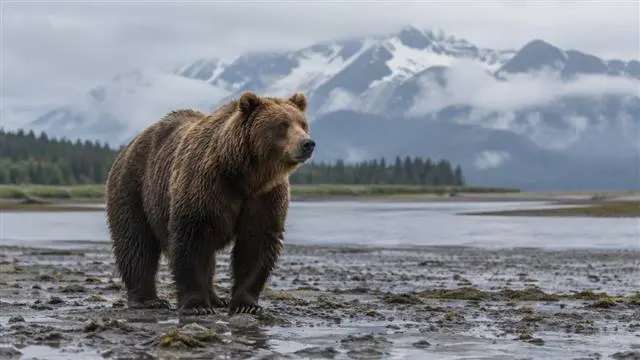
As a guest to travel to by boat to hunt with you, I realize that finding a bear is the least of my concerns. More importantly, I have to arrive at the coastline prepared for a hunt, I have to communicate well with you, I have to read the ground and comply with all legal requirements as well as ensure my safety while hunting. One afternoon spent on a tidal flat searching for bears for a few hours will reveal that it is a patient man who hunts in these areas, not some brash lad.
Preparation starts before the vessel moves
Remember to bring everything the outfitter lists for you to bring. Find out how long before you depart for the hunt travel days will be. Find out what kind of physical activity the hunt will demand and how the weather may affect travel to and from the area where you will be hunting. Uneven ground, long periods of glassing and wet, sloppy terrain all demand that you be in good physical shape before you arrive. Don't just prepare for packing a long heavy pack.
Check for current Alaska Department of Fish and Game (ADFG) regulations for your hunt. Also, check federal and local land-management rules that apply for the location where you will hunt. Make sure you understand all the requirements for your hunt including License, locking-tag, harvest-ticket, permit, season, and salvage regulations. Ask your guide for clarification on all the regulations for your hunt.
In addition to bringing equipment for your photo opportunity, hunters should also bring items that will keep them safe and healthy for the long haul of bear hunting. Items like extra waterproof clothing, goggles, food, water, map, compass, and communication device should all be brought as recommended by your guide. Inform your guide of any medical problems, any hearing or vision impairments, and of any medications that the hunter may be taking.
Use the guide as a second set of eyes
Simple instructions such as; Stop, Go, Return to Shore and Handling a Sighting should be agreed upon by all members of the hunting party before leaving the vessel. Who makes the final call on approach, when does the group break off from the bear and how will the boat crew assist in the recovery of the bear are all important questions that should be answered prior to stalking off in search of Ursus.
It's not as simple as getting closer to the bear. Ask yourself, what would have to change for this to be a safe, legal and responsible hunt? Waiting for a change in wind direction or moving to another location could result in a more productive and successful hunt for both you and your guide.
It's not that the hunt failed. He is simply applying the knowledge of the area that he has gained from years of experience and would not be able to transfer to you in a short briefing and map.
Visibility and wind set the terms
Coastal terrain may look simple from the water but can contain beaches, sedge flats, alder and driftwood along with steep ravines and sharp rising ground. Visibility of a bear can disappear in an instant as it goes over a low rise in the land only to reappear before you in short order. It can become lost in the worst of fog, rain and flat light and rarely will a bear be clearly visible against an overly complex background.
Wind also has to be taken into account. A bear with a keen sense of smell will depart long before you get close enough for a shot, and shifting winds can affect your route in unforeseen ways. A guided bear hunt can involve pauses in travel in order to allow scents to clear, traveling in wide indirect arcs to get around to working back to an earlier location, or even changing locations in order to get to the right vantage point to glass.
An unobserved background is equally important and visibility into that also will be affected by wind, terrain and light. Remember that partial visibility into an animal, even to be sure of what it is, or visibility of distant animals also will be affected and you should wait until visibility improves.
Keep distance and safety practical
Bear hunting safety is all about space, awareness and ensuring everyone in your party is on the same page and following the guide. Pay attention to where you are in relation to the guide and other members of your party and make sure you're able to keep track of your vessel, the route you're taking along the shoreline and get back in time before weather moves in. A seemingly ideal spot from a distance can quickly turn into a less-than-ideal location once you get up close and get a better look.
Wait for the guide's signal before approaching a downed or wounded bear and review the plan for recovery that was made prior to the shot. This will include who is watching for the boat, who is calling the boat, what route the boat will be taking, what happens if weather turns bad, and how the bear will be handled after it is harvested. Not all locations have safe recovery of bears, and this should be a consideration prior to deciding to harvest.
In terms of transporting firearms, your guide should inform you of the safest way to transport them, unload them, and to store them while on land. Follow these instructions exactly – for example, the danger of a muzzle entering a space where it may discharge far out weighs the worth of any photo, or of taking the hunt.
Legal responsibility continues after the shot
Hunting a bear does not end the legal requirements for a bear harvest. These requirements need to be carefully looked at before you head out on your hunt and be sure to find out who is going to be responsible for completing each of the requirements. We have identified the required edible portions that must be used and the required parts that must be saved for the hide. Often there are additional requirements for salvage and transport of bear parts that must be met for a successful bear hunt.
Check with your guide to see what you will need to do with regard to documentation of the animal in the field, and who is responsible for particular parts of the required paperwork. The laws for hunting in Alaska can be very specific and subject to change. Therefore it is important to check out the current Alaska Department of Fish and Game information as well as any Federal land regulations prior to your trip.
This brings up another very important factor to consider in terms of your ethics as a hunter. Yes, you must comply with the above stipulations as far as usage of the various edible parts, protecting hide and other required parts for example. But you must also make the best use of the animal that has been given to you. Taking a shot that results in an uncertain recovery is not ethical hunting.
Let patience make the decision
Waiting doesn't necessarily mean missing an opportunity on the tidal flat. The wind can change in a heart beat and move the bear out into the open or go the other way and have him disappear into cover. Whether he reappears or not, waiting on the flat to change was the smart thing to do and you should feel good about that.
The strongest hunter will recognize when a shot presents a quality hunting experience and communicate effectively with his fellow hunters to make the decision to take the shot. In the end, a quality hunting experience for the hunter, the guide, the animal and the rest of the party on the tide flat will have been preserved by a prudent hunter who recognizes that he cannot control all of the variables that affect his hunt and exercises restraint in a quality less than hunting situation.