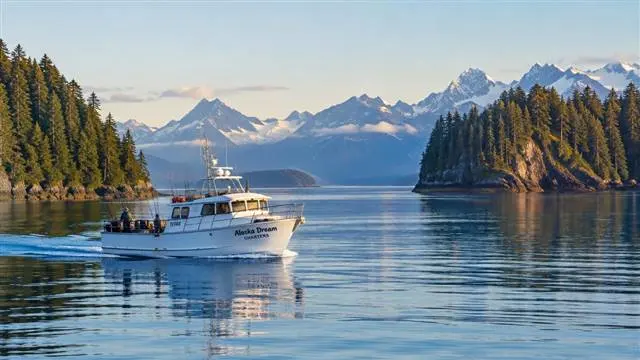
If you are traveling to a coastal location to hunt and have to move wet gear, food, fuel, meat and your camp within that location, a vessel changes the dynamic of such a hunt greatly. It is not just a means of transport, it is also a flexible base that can greatly improve your coastal hunt. Being able to hunt in areas that would take too long to set up and pack up a shore camp in, traveling to other locations to hunt and returning to your vessel to move to another location, staying mobile and adapting to changing circumstances whilst remaining within safe, legal and ethical bounds is the key to successful coastal hunting.
Access Without Treating the Coast Like a Road Map
In addition, the vessel allows you to connect up separate beaches, coves and river mouths that would otherwise be inaccessible from a fixed lodge. In planning your hunt, you can select a location based upon the best available information on the local habitat, recent conditions and relevant laws rather than being forced to select a single location for a shore-based camp for the duration of your trip.
In reality, charts don't tell the whole story and present many scenarios that can impede safe landings and boarding. There are many rocky landings, very shallow water, lots of surf, even kelp; often strong currents; and many, many private properties with restricted access. A good route plan needs to include sites for safe landings as well as for safe anchorages should the need arise to withdraw at night or change your plan mid-way. And you need to ensure there's a realistic return on your day's activities.
Clearly outline on the chart who has the final say if there is a disagreement over access to potential hunting grounds and safety of the party. It is far better to miss an opportunity than risk the safety and well-being of the party through hasty landing in bad weather.
The Boat as a Flexible Base Camp
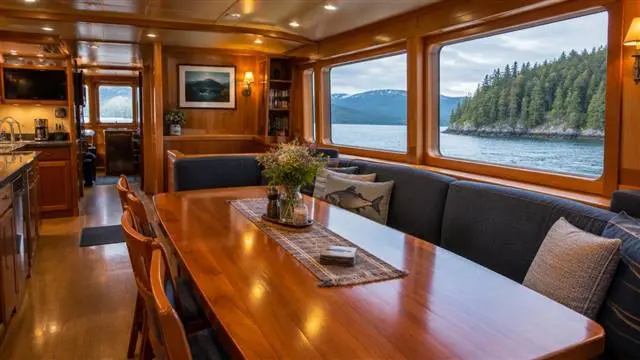
A good way to bring camp to the boat is to have all dry gear stored in the vessel. It means that instead of spending time to set up a new camp every day or to move it to a new location, you can simply move the boat to the new location and get settled in for the night. This works especially well in rainy weather.
In order to be able to move from place to place and to have enough room to store dry gear, heavy gear, hunting gear, fuel, food, and personal baggage, everything must be organized in a logical manner. Food, hunting gear, and meat/hides must all be stored in separate areas of the vessel in order to keep them from getting contaminated. Furthermore, everything must be kept dry in order to prevent damage from moisture and mildew.
Also before you head out check to see if you can get to the following in your vessel before you have to get to your hunting gear: your emergency equipment, your navigation tools, your communication tools. If you cannot get to these in the order listed above then your hunting gear must move prior to these essential items. You need to reorganize your vessel.
Weather Turns the Schedule Into a Decision
Bad weather can mean a less than perfect hunting trip but on a fixed-based trip you are stuck. However, a vessel gives you a host of alternative routes around bad weather. Just remember that what looked like a perfect route in the forecast can be influenced by many factors including wind direction, tide, swell and even the condition of the beach that you plan to land on.
Be prepared to change your schedule. Know the forecast for the water you will be traveling. Check the marine forecast on reliable web sites, and compare with local reports. Plan for margins of error in your itinerary. If you find a wonderful hunting opportunity, do not allow yourself to be talked into crossing open water or to land on a marginal beach for the sake of that one opportunity.
In regards to safety and travel on the water in Alaska for hunting, include in your planning for safe travel the following items for safe travel on the water: flotation devices, communication devices, charting devices for navigation, knowledge for cold water recovery, and a plan to ensure safe and sober travel for the group in case of unexpected delays. The U.S. Coast Guard and other authorities list the requirements for different types of vessels for travel on the water.
A Better Daily Rhythm, With Less Shore Time
Instead of spending more time moving between camps and dealing with pack gear every day, tracking, stalk hunting, field care and cleaning game can all happen and be completed efficiently within hours, and then head back to camp to dry off and organize gear.
Efficient travel may equate with short shore time, to be used to track and hunt, and then to field dress and pack game to return to the boat. But things don't always go as planned. A hunter needs to have plenty of time to do all the things required to complete a successful hunt, to avoid problems caused by rushing to complete tasks best done slowly and with care.
The group needs to know who stays with the boat and who carries what forms of communication as well as when different situations will result in the operation being stopped.
Comfort Helps, but It Is Not a Free Benefit
Of course, the boating offers some protection from elements such as rain, tremendous comfort in having a warm, stable and dry place to sleep and to store other comfortable items such as food, spare clothing, sleeping pads, etc. rather than having to lug these items along in large and cumbersome packs.
Most over-the-counter (OTC) motion sickness medications have the potential to impair cognitive function and therefore should only be taken under the direction of a medical doctor and only for that specific purpose. Ensure all team members know the route and have means to provide hand and arm signals from the water. Keep hallways and surfaces of the boat wet to prevent slipping. Treat all wet surfaces as if they were to slip and fall and suffer serious injury.
Do not mistake comforts for needs to continue to travel when in discomfort, such as being cold, tired or ill.
Responsibility Follows the Access
With remote shoreline access comes responsibility for keeping these areas quiet for wildlife viewing and for following all rules governing the time of year to hunt, type of hunt, means and methods, and access. Remember to take all of your trash including food scraps, lines, plastics, and damaged equipment with you. The camp you establish for a few days affects the area for an extended period of time.
Important information about the current Alaska Department of Fish and Game (ADFG) regulations for your coastal hunt, as well as local rules and special permits, licenses, tags, etc. required for that hunt, can change at any time and often vary by species, unit, type of resident, method of harvest, location, etc. Ensure you obtain the most current and credible information from official sources regarding the necessary requirements prior to your departure for your coastal hunt.
A boat gives a party to hunt coastal places more options and makes storage of more gear possible. The best aspect of a boat as a base camp, however, is that it is mobile. Tides, weather, poor motion of a boat in the water, and short periods of time to be on shore are all reasons to be aware of the weaknesses of a boat as a base camp and to include them in your planning of the trip.