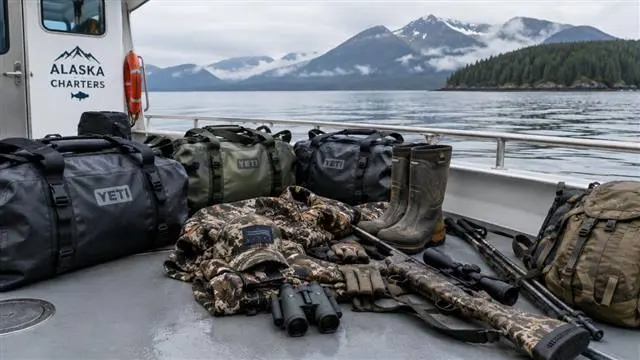
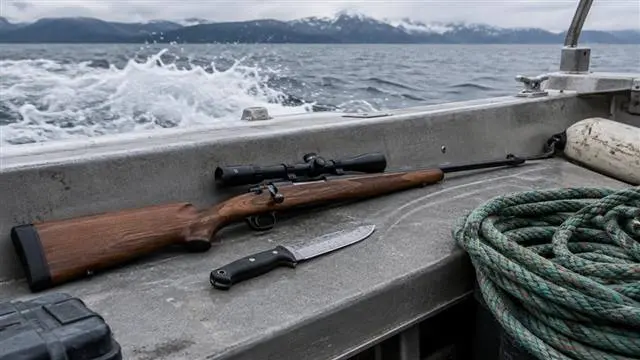
Salt spray often leaves its trail without warning, solidifying onto rifle slings, then drying into zipper rings or onto optic surfaces where it can later bond with damp air to produce a very stiff firearm, hazy optics, corroded metals or, worse yet, dead electronics that cannot be recharged when you are out of range. Fortunately, most of these problems can be averted with a few simple measures that can be employed while you are in the field, and then in your home too. Our objectives here are to prevent problems with moisture, not to attempt to make all of your gear 'waterproof'. Such measures can create problems of their own – chief amongst which are safety concerns and additional maintenance.
Start with the surfaces most exposed
The most sensitive areas of hunting gear are the high wear points – i.e. areas frequently in use – on a vessel. A scope's ring struts, scope turrets, sling swivel, binoculars' hinges, knife's pivot point and the zippers on your gear's case all fall into this category. As previously noted, fine spray can seep into seams and between contacting metal fasteners so it is important to inspect gear stored in cold areas and then transferred to warm cabins etc. frequently.
A simple and clean pocket cloth will suffice for wiping off salt residue on metal parts, and another for optics to prevent smudges. Just remember to carry a few lens cloths for your optics to wipe off any grit or other debris. Rinse metal parts with fresh water, then allow to dry prior to storing them away.
Even though you have a cover for your rifle, the inside of the cover can be wet for a long time and transfer that moisture to your rifle when you put it in the cover.
Give the rifle a light, appropriate barrier
When storing firearms in wet country and bringing them into a dry, heated building, ensure they are stored with very light film of the appropriate firearm lubricant. It's far better to make sure all surfaces are clean before applying any such product and follow the manufacturers instructions carefully, remembering that excess oil can worsen problems with dust and also get into small crevices to cause more problems down the line.
This applies to the exterior steel as well as the sling hardware, magazine parts, and other metal parts that are exposed on your firearms. This does not apply to the bore and chamber of your firearms, nor to your ammunition. Any bore treatment must be specifically intended for that purpose and carefully removed before shooting again. Ammunition should always be kept in a dry place and away from any oils, solvents, etc. and their corresponding rags. Never use an unknown product inside your firearm's action. This also means never attempt to change the safety, trigger, etc. in order to make your firearm more water resistant.
For those instances when your wet rifle is in storage for an extended period of time, be sure to unload it in a safe direction and location, allow it to drip dry and then service it with the proper maintenance products. If for some reason water or salt enters internal components of your rifle, do not attempt to service it yourself; take it to a qualified gunsmith. As for routine firearm storage, make sure all of your firearms are stored in a secure, dry location and are inaccessible to children and others who should not be using them. Current Alaska requirements for storage as well as other rules governing the storage of firearms in other states are subject to change so make sure to check with current Alaska guidance prior to your next hunting trip.
Protect glass without grinding grit into it
Keep the surfaces of exposed optics (lenses, turrets, eye pieces, etc) clean and free of grit by wiping them with a soft cloth or a clean lens brush prior to storing them. Lens-safe cleaner and a soft lens cloth are best for cleaning your scopes and binoculars. Do not use shirts, paper towels, etc. to try and clean your optics.
Remember to store your scope covers closed in your vessel, and keep your binoculars and/or spotting scope wrapped in a simple protective case when not in use. Don't seal up your optic in a dry airtight case thinking all will be well and then discover nasty condensation inside the lens(es) later. If the scope does develop any fogging or condensation, DO NOT attempt to clean or dry out the scopes trying to clear the fogging by opening up the scopes and using heat etc. Call the manufacturer or a qualified gunsmith to have them cleaned and serviced for you.
For optics, preventing scratched lenses is worth a few minutes of extra time on the deck. Wipe optics clean and stow them rather than continue to wipe them when the spray is reducing visibility.
Keep electronics dry, not merely covered
Even better is to store all electronics in waterproof cases or dry bags that are specifically made for your device. Make sure to check the seal and closures of any case before you head out on your trip. A wet device in a closed case will be a much worse sight than a wet device left exposed.
Similarly, charge connections must be cleaned of moisture and water before connecting to power sources. Devices that have come into contact with water must be turned off and allowed to dry as directed by the manufacturer before use. Such back-up navigation as well as spare power sources are wise to bring on a trip, but these do not replace good protection of one's main equipment.
Be aware of salt residue on boat dock lines, and dry all charging cables thoroughly before storage. Cap the ends of cables to keep water out of the ends, and store clean charging cables separately from your wet clothing and gloves.
Do not overlook zippers, buckles and small hardware
As mentioned above, all zippers (on clothing, bags, cases, etc) should be 'brushed' off for any loose debris. Removable parts that can be rinsed with water (such as clothing with removable parts) should be rinsed and then allowed to dry completely. Then and only then can lubricant (such as zipper lubricant) be applied to 'stiff' zippers. IMPORTANT: Always use a lubricant that is specifically recommended for the type of zipper you are using. Never use oily type lubricants on firearm grips, scopes, binoculars, etc.
Rinse off salt and grit from metal clips, carabiners, tripod collars, knife pivots, pack hardware and other metal gear parts. Inspect the threads of metal parts such as screw heads and slap strap mounts. Retain stainless or coated parts to prevent corrosion but do not rely on their corrosion resistance. Replace the coatings, cases or bend closure as necessary before venturing out to the remote country location.
The home routine that prevents next-trip surprises
Pull out your gear after each trip, close up the cases and check for signs of dampness. Open up the cases and check the contents, the case liners and the carrying straps for any signs of dampness or of being contaminated with salt. Check screw heads, sling swivels, magazine edges, scope ring grease, battery contacts and zipper slider ends for signs of aging or of being contaminated with salt or other materials. Orange spotting on metal surfaces can develop in a very short space of time to form flakes of corrosion. Seized fasteners are not easily unmoved.
Clean your guns using the proper cleaning for the gun and store them unloaded and locked, in a safe place, and keep separate from ammo. Using desiccant in closed up storage containers is OK as long as the desiccant is dry and is replaced or reconditioned as instructed. DO NOT seal up wet gear in plastic for long periods of time. Reference current official Alaska Statutes and the manufacturer of the firearm or piece of gear in question for the latest rules and safety advice.
A compact after-trip checklist
– Open every case and dry the contents, liners and straps.
– Wipe exposed firearm metal and inspect controls, fasteners and sling hardware.
– Verify that the exterior of the optical lenses are clean and that the internal surface is clear of moisture "fogging".
– Clean zippers, (stowaway) buckles, (gallery) clips and tripod fittings for salt and grit.
– Check batteries, charging ports, cable ends and other seals for moisture.
– Keep ammunition dry and away from cleaning products.
– Store firearms unloaded, locked or stored as required and keep them out of reach of children and others not authorized to use the firearm.
– Record any damaged parts for repair before your next departure.
Maintaining gear before you go is easy to do and takes minutes to do each time you take gear out. The best way to protect gear from saltwater is to clean gear before storing it to keep saltwater damage from starting to break gear before next time you go.