
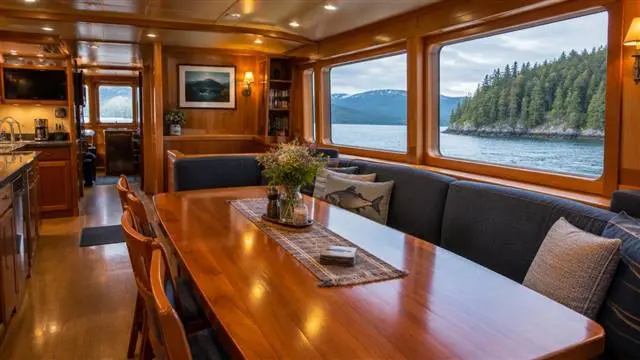
A coastal hunt is shaped as much by life on the boat as by time ashore. On a small charter vessel, a wet jacket in the wrong place, an unwashed mug or a missed weather briefing can affect everyone aboard. The most useful way to prepare is to follow one ordinary day: a guest wakes before departure, helps keep the boat orderly, listens during decisions and steps onto shore with a clear plan. That rhythm makes the trip safer, less stressful and more respectful of the coast and its wildlife.
The day starts with weather, tides and a shared plan
Before breakfast, the skipper checks the forecast, sea conditions, visibility and the day's route. Guests do not need to interpret every marine detail, but they should be ready to hear that a landing may be delayed, shortened or cancelled. A calm morning in the harbor does not guarantee calm water beyond a headland.
Keep personal gear close and remain available while the crew discusses timing. This is a poor moment to disappear below deck for a long shower or repack every pocket. Ask clear questions: What layer should be worn on deck? Which bag goes ashore? When should everyone be back at the landing point? A few minutes of attention can prevent a rushed transfer later.
The plan may also depend on tides, daylight, animal movement, fuel, distance and legal boundaries. A flexible guest understands that changing course is part of responsible trip management, not a failed promise.
Breakfast, storage and the small-space rules
On a compact boat, storage is shared infrastructure. Keep one accessible day bag for rain gear, water, lunch items and essential personal equipment. Stow hard cases, boots and spare clothing where the crew directs them, and never block a hatch, companionway, bilge access point or emergency equipment.
Meals tend to work best when guests take only what they will eat and clean up promptly. A bowl left in the sink may seem harmless, but it can become a problem when the vessel is moving or another person needs the galley. Secure bottles and loose objects before the boat accelerates or turns.
Food should be packed with the whole trip in mind. Strong odors, crumbs and scraps can attract wildlife around a landing site or camp. Follow the crew's instructions for waste, food storage and leftovers. Do not toss anything overboard unless the crew specifically confirms that it is permitted and appropriate.
Hygiene without turning the cabin into a hazard
Life aboard a hunting boat requires practical hygiene rather than hotel-style convenience. Use fresh water carefully, keep muddy or bloody outer layers out of sleeping areas, and ask where wet gear can drain. A towel or pair of gloves left across a walkway can create a slip or trip hazard when the boat rolls.
Toilets and wash areas have operating rules that vary by vessel. Learn them early and follow them exactly; unsuitable items can damage equipment or stop a system from working. If you feel seasick, tell the crew before symptoms become severe. They can help you choose a safer place to sit, while hiding the problem usually makes the boat harder for everyone to manage.
Personal cleanliness also supports good camp etiquette. Change into dry base layers when possible, air boots only where permitted and keep shared surfaces free of mud, fish residue and field debris.
Watchfulness is a crew responsibility
A guest is not expected to operate the vessel, but everyone aboard should notice hazards. Hold handrails, move carefully on deck and ask before opening a locker or stepping into a work area. Keep firearms unloaded and secured according to the guide's instructions whenever they are not being actively handled for a lawful hunting purpose. Never point a firearm at a person, boat or building, and do not assume that a case, chamber or safety position is obvious to someone else.
The same care applies to wildlife. Do not feed animals, approach them for photographs, leave bait or food behind, or treat a close encounter as entertainment. If the guide calls for a quiet retreat, immediate return to the boat or a different route, follow that direction without debate.
Before departure, confirm that licenses, tags and any required permits or harvest documents are in order. Alaska regulations can differ by species, area and season and may change. Check current guidance from the Alaska Department of Fish and Game and follow the guide's instructions for documenting, salvaging, transporting and reporting harvest. When in doubt, stop and ask before acting.
Shore landings reward patience
A shore landing is a sequence, not a race. Wait for the crew's signal, keep your hands free for balance and step where directed. Do not jump early from the boat or stand in the surf to help drag it unless the crew asks. Waves can lift or swing a small craft with surprising force.
Carry only the equipment needed for the immediate plan. Extra packs, loose ammunition, camera cases and food can slow a landing and create confusion on a narrow beach. Once ashore, establish where the group will regroup, where meat or equipment will be kept and what route is acceptable. Avoid trampling vegetation, crossing sensitive areas unnecessarily or leaving flagging, packaging and other trace materials behind.
A quiet approach is not just a hunting technique. It reduces disturbance to other users and wildlife. Keep voices low, silence unnecessary devices and avoid broadcasting the group's location from shore or a vessel.
Quiet hours and the return to the boat
On a multi-day coastal hunting trip, the boat is both transport and sleeping space. Quiet hours matter because someone may be resting after an early departure, a demanding landing or a long watch. Close doors gently, use headlamps carefully and keep conversations below deck when others are asleep.
At the end of the day, return wet gear to its assigned place, rinse or clean equipment as directed and report damage promptly. Do not hide a broken buckle, depleted battery or missing item because you fear blame. Early notice gives the crew time to find a safe workaround.
The best crewmate is not the person who stays out of the way. It is the guest who listens, shares space, handles gear carefully and accepts that weather and wildlife set limits. That attitude leaves the vessel ready for the next landing and the coast treated as a living place rather than a backdrop.