Choosing between a guide and a self-directed hunt in Alaska affects far more than the amount of help available in the field. It changes how you reach remote ground, confirm legal boundaries, handle weather delays, recover an animal and respond when plans fail. A guided trip can reduce some unknowns, while an unguided trip gives capable hunters more control over decisions and preparation. The useful comparison is not simply cost. It is an honest check of access, skills, equipment, time and tolerance for logistical risk.
Start with the hunt, not the label
A guided Alaska hunting trip may be the practical choice when the species, unit or terrain is unfamiliar. A qualified guide can help interpret local conditions, identify lawful opportunities, coordinate transportation and keep the day focused on decisions that matter. That support does not remove responsibility from the hunter. You still need the correct license, tags, permits, transportation arrangements and personal equipment.
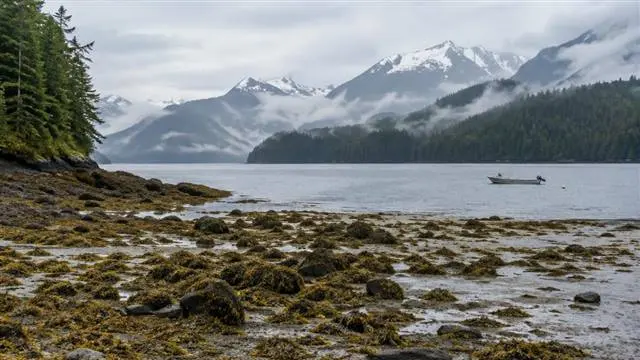
Unguided Alaska hunting can suit someone who already understands remote travel and is prepared to manage the entire chain of decisions. That includes selecting legal hunting ground, confirming access, arranging transport, planning for delays and deciding what happens after a successful harvest. Familiarity with hunting at home is useful, but it may not translate directly to tidal shorelines, steep coastal country, floatplane travel or vessel-based access.
Access is often the first dividing line
Remote access is not one problem. It may involve public land status, private property, federal or state restrictions, navigable waters, beach access, aircraft limitations and a vessel operator's route plan. A location that looks open on a map may be difficult or unlawful to enter from the shoreline. A legal hunting area may also be impractical if an animal cannot be recovered from the terrain.
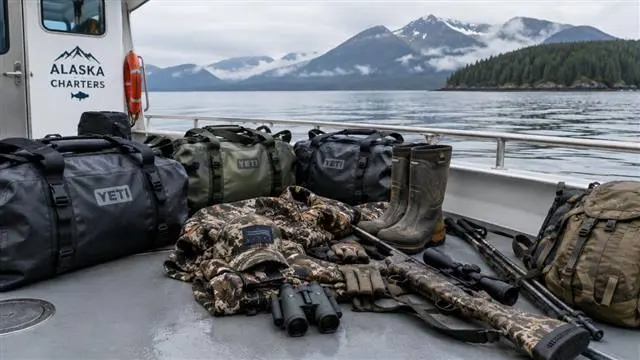
Guides often bring established planning habits and local familiarity, but ask specific questions before booking. Who controls the transport decision? What happens if weather prevents landing or a vessel cannot reach the planned beach? How much walking, climbing or shoreline travel is expected? What recovery equipment is available, and what part of the work remains yours?
For an unguided trip, confirm access with the relevant land manager and review current maps before committing to transport. Do not treat a dropped pin, old report or online discussion as proof of lawful access. Build a backup location and a return plan that works if tides, wind or visibility change.
Navigation and recovery are separate skills
Finding an animal is only one part of a successful hunt. Coastal terrain can make a short distance slow, exposed or technically demanding. Wet ground, thick brush, steep slopes and changing tides can complicate both the approach and the route back to camp or a vessel.
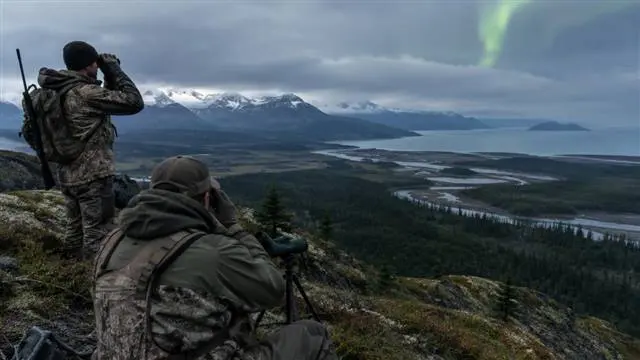
Guided hunting may provide a second set of eyes for route choices, weather interpretation and recovery planning. That help is especially valuable when the group includes people with limited experience carrying loads over uneven ground. Still, every hunter should understand the planned route, carry appropriate personal safety equipment and know what to do if separated from the group.
On an unguided hunt, assess recovery before the trigger is ever pulled. Can the animal be reached without crossing unsafe terrain? Is there enough daylight and weather margin? Can the meat be protected from heat, rain and scavengers? What lifting, hauling, flotation or vessel-transfer problem might follow? A plan that ends at the shot is incomplete.
Regulations require active verification
Alaska hunting regulations vary by species, location, season, residency status and permit or tag requirements. Rules can also address methods, salvage, evidence of sex, transport, reporting and meat handling. Federal rules may apply on federal lands, while state requirements govern other areas. Special restrictions can affect protected areas, subsistence zones or specific transportation arrangements.
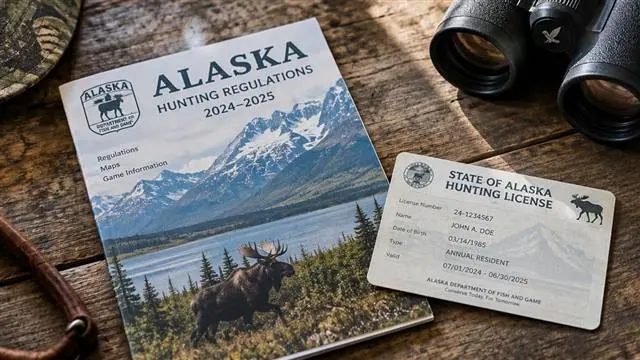
A guide may help identify the rules that apply to a planned hunt, but the hunter remains responsible for compliance. For an unguided trip, check current Alaska Department of Fish and Game guidance along with the appropriate federal land manager or other official authority. Confirm the unit, dates, licenses, tags, permits, legal methods and salvage obligations shortly before departure. Requirements may change, and summaries from previous seasons are not a substitute for current official guidance.
Keep copies of permits and key contact information where they remain usable without cell service. If a regulation is unclear, resolve it before traveling rather than relying on an assumption in the field.
Compare the full logistics burden
The cost categories differ by trip, but the list is usually longer than license and tag fees. Consider guide or outfitter charges, vessel or aircraft transportation, fuel, lodging, food, communications, permits, equipment rental, emergency reserves, meat care, trophy handling and freight. An unguided trip may reduce guide-related expenses while adding planning time, specialized equipment, transport coordination and a larger contingency fund.
Ask which services are included and which are not. Does transportation cover the return trip after a delay? Who supplies fuel, food, satellite communication, coolers, game bags or recovery tools? Is meat transport arranged, or must the party solve that problem after the hunt? Written answers prevent a low initial estimate from hiding major responsibilities.
Time is another cost. A weather delay can affect work, connecting travel, lodging and food. Leave room for the trip to finish safely rather than planning a schedule that only works under perfect conditions.
Use a blunt self-assessment
Choose guided hunting when you need local help with access, unfamiliar terrain, recovery, legal interpretation or remote travel. It may also be sensible when your group has limited time and cannot absorb several days of delay or problem-solving.
Consider an unguided hunt only if your group can independently handle navigation, communications, first aid, weather decisions, meat care, transportation changes and emergency evacuation planning. You should be able to explain the legal hunt area, the access route, the recovery method and the backup plan without depending on a single person who may become injured or unavailable.
Before deciding, write down the three situations most likely to end the trip: bad weather, mechanical trouble, an injury, a missed pickup or an animal in difficult terrain. Then identify who solves each problem, with what equipment and what authority to change the plan. If the answers are vague, more support or a simpler destination may be the responsible choice.
The strongest plan is not the one with the fewest outside services. It is the one that matches the group's skills, legal obligations and recovery capacity to the actual country being hunted.