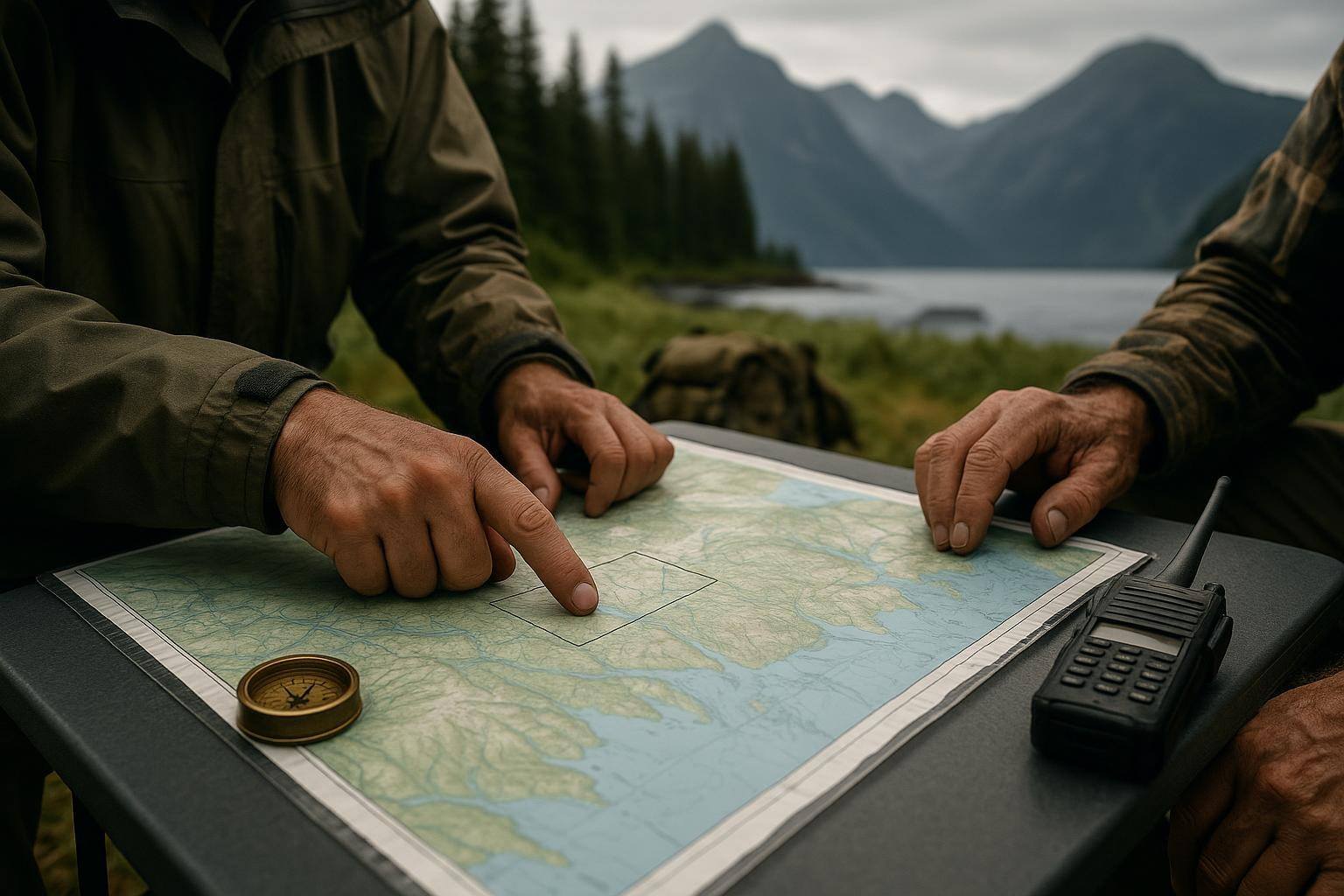
A guided hunt can go wrong before anyone reaches the field. Permission may be unclear, regulations may have changed, or a guest may assume the guide will make every decision once the group is moving. Good preparation reduces avoidable problems without pretending that weather, animal behavior or access conditions can be controlled. The useful questions are what to confirm, what to decline and how to respond when the plan no longer fits the ground in front of you.
Confirm access before you confirm expectations
"Unfamiliar property" may mean private, leased, state-managed or federal land, or a route crossing several ownerships. Those distinctions affect where you may travel, park, camp, hunt and retrieve an animal. Do not rely on "we have access." Ask which parcels are included, whether access is limited by season or route, and who is responsible for permission.
A planning map is useful but not always the final authority. Boundaries can be difficult to identify in thick cover, tidal terrain or changing light. Ask how the party will recognize them and what happens if an animal crosses a boundary after the shot. The right response may be to stop, mark the location and contact the appropriate person rather than follow immediately.
Put the regulations in the planning folder
Alaska hunting regulations are organized by species, hunt area, season, method, permit or registration requirement, and sometimes additional local conditions. Requirements can change, and emergency orders or area-specific restrictions may apply after general materials are printed. Review current guidance from the Alaska Department of Fish and Game and any relevant land manager before departure. A guide's advice is valuable, but it does not replace the hunter's legal responsibility.
Check the details most easily overlooked: licenses and tags, evidence of sex or species identification, salvage requirements, reporting deadlines, transport rules, nonresident provisions, and restrictions on bait, aircraft or motorized access where applicable. Keep required documents available in waterproof form. If a rule is unclear, ask before traveling, not when an animal is down.
A useful test is simple: could you explain the applicable season, area and tag requirement without reaching for someone else's phone? If not, keep checking.
Make guide communication specific
A productive guide conversation is not a one-time briefing. Share your physical limitations, relevant experience, preferred pace, shooting comfort, medical concerns and willingness to pass on an uncertain opportunity. These details help the guide judge routes and timing; they are not a test of toughness.
Ask how decisions are shared. Who chooses the route? Who confirms the animal's identification? What is the plan if visibility drops, weather turns, an animal is wounded, or a shot opportunity appears across a boundary? Also discuss communication if the group separates briefly. Direct questions can prevent assumptions from becoming serious problems.
Avoid promising to "take anything legal." Legal does not always mean appropriate for the trip, property or conservation objective. Tell the guide what you are prepared to pass up, including a marginal shot, an animal you cannot confidently identify, or a recovery requiring unsafe travel.
Read the ground before reading the opportunity
New country encourages rushed interpretation. A trail, fresh sign or distant movement may seem convincing because you want the plan to work. Slow down to examine wind, backstop, visibility, terrain, other people, livestock if present, and the likely direction of a wounded animal. In coastal country, rain, fog, tidal water and slick footing can quickly turn a reasonable route into a poor one.
The best shot is not necessarily the closest or largest opportunity. It allows positive identification, a clear and safe shooting lane, a responsible range for the hunter's ability and a realistic recovery plan. If one condition is missing, waiting or passing is a decision, not a failure.
Before acting, ask: What exactly am I looking at? Where will the projectile travel if I miss? Can I reach and recover the animal without crossing a hazard or trespassing? If any answer is uncertain, say so aloud.
Treat recovery as part of the shot decision
Ethical hunting includes the work after the trigger is pulled. Before taking a shot, consider how terrain, weather and daylight will affect tracking, field care and transport. A steep slope, deep water, dense brush or rising tide may not make recovery impossible, but it can change the threshold for taking the shot.
If an animal is wounded, remain calm and follow the guide's direction. Mark the last known location, note its travel direction and avoid trampling sign. Do not begin an improvised pursuit that separates the group or creates another hazard. The guide may wait, circle, seek help or stop when continuing would be unsafe or unlawful.
Stopping a search is difficult. It should still be discussed honestly, documented as required and used to improve future decisions rather than concealed behind optimistic language.
Leave the property better than you found it
Conservation is expressed through small field choices. Carry out food packaging, line, damaged gear and other waste. Keep camps, vehicles and boats clear of spilled fuel or attractants. Respect closures, nesting areas, subsistence activity, other hunters and local requests about routes or timing.
Do not assume a guide's permission covers everyone in your party or every activity you want to add. Ask before scouting beyond the agreed area, collecting specimens, using a drone, sharing location details or bringing another visitor. Sensitive places can be damaged by attention as quickly as by poor conduct.
Before departure, run this check:
– Current license, tags, permits and area rules verified
– Access, boundaries and retrieval authority understood
– Guide's safety and communication plan discussed
– Animal identification and shot limits agreed
– Recovery route and changing-weather alternatives considered
– Waste, meat care and reporting responsibilities assigned
Local rules and land conditions can change, so repeat the verification close to the trip. Responsible hunting is not a performance of confidence. It is the habit of slowing down when facts are incomplete, asking precise questions and choosing the option that protects the animal, land, people involved and future of the hunt.